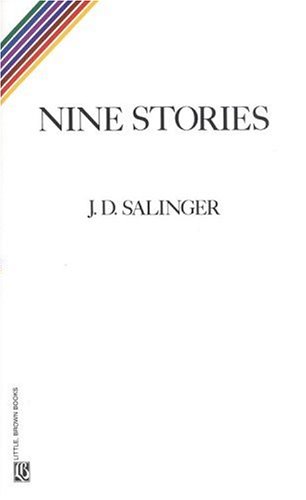
 Though they all were good to varying degrees, the best short story book by far was Nine Stories by J.D. Salinger. I’d read one of them before (“Uncle Wiggiley in Connecticut”) in a writing class I took a few years ago, but like most people, all I knew about Salinger was from reading The Catcher in the Rye in 9th grade. But Salinger really is an amazing writer and Nine Stories is one of those books I’m still thinking about days later. I even went back and read a couple of the stories again.
The most famous story of the nine is “A Perfect Day of Bananafish” which also happens to be the first. Without spoiling anything, I'll just say that it’s emotionally powerful like few things I’ve ever read. One of the things that makes Salinger’s stories so interesting is that he lets you see one character through other characters eyes. For example, in “For Esme, With Love and Squalor,” we meet Esme, a fascinatingly precocious thirteen-year-old choirgirl through the eyes of an American soldier stopped over in London on his way to fight in D-Day. The premise is fascinating and Salinger somehow manages to capture both characters perfectly, even creating a strange sort of unspoken sexual tension between the two.
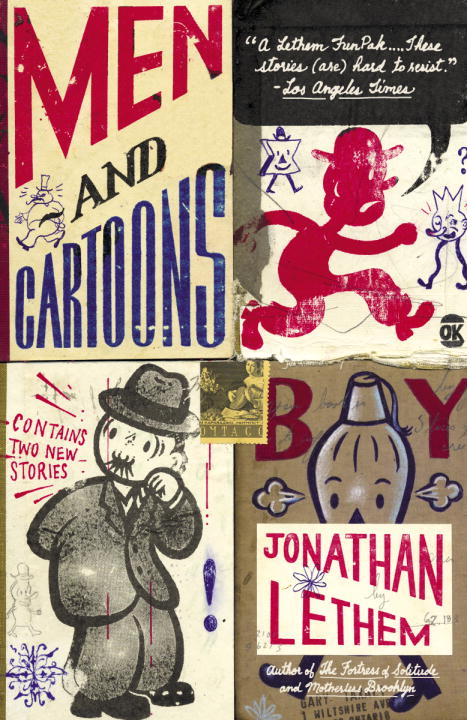 As for the other short story books, I read Jonathan Lethem’s Men and Cartoons. This is actually a very good collection, especially “The Adventures of Super-Goatman” and “Interview with the Crab.” Lethem’s imagination is his strong point, as virtually all of the characters and situations reflect his love of Marvel Comics (hence the title) and many would themselves have made for interesting comics adaptations. But from a prose standpoint, Lethem comes nowhere near Salinger’s ability to conjure magic from a few choice sentences (though it should be pointed out that these were some of Lethem's first published stories). Still, as a whole, the collection is pretty solid. There were only a couple stories I had a hard time getting through, not nearly as many as I did with Looking for Jake by China Mieville.
Praised by Neil Gaiman on the back cover, Mieville is without a doubt a very talented writer, and the stories that I liked were excellent. My favorite by far was “On Certain Events Occurring in London” which was written as if the reader were rummaging through someone else’s briefcase, looking at snippets of classified documents which describe incidents where entire streets literally appear out of nowhere. It’s that very interesting and unusual narration technique of flipping through someone else’s dossier which makes this story so unique and compelling. There were a few other stories I liked, including “The Tain,” the final novella-length story which comprised the latter third of the book, where vampires have basically overrun the city of London. The story held my interest, and Mieville’s use of language was extraordinary, but the ending felt like a cop-out, a non-ending rather than a resolution, and despite how much I had enjoyed the rest of the story, I felt disappointed afterward. As a whole, I had a hard time getting into at least half of the stories, including one comic book story illustrated by Liam Sharpe, either because they were written poorly or just didn’t have that interesting of a premise to hook me.
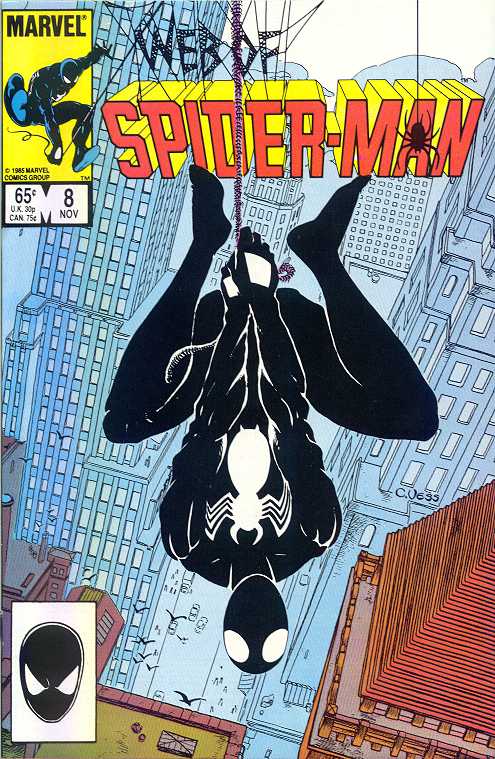
I’ve also been busy selling off my collection on EBay, which is actually going pretty well. It's strangely cathartic getting rid of some of this stuff. There's still plenty of stuff I'm hanging on to, but with so much of this stuff, it just feels good to let go of the past. I wouldn't say I'm getting rich, but the stuff is selling for the most part. I’m pricing it pretty low, so people are getting some great deals. For example, I recently sold my complete set of Gotham Central (which I may regret someday), a near complete run of the first 30 issues of Spider-Man 2099 (which I only read a couple of and definitely WON'T regret), the first six issues of Busiek’s Conan, a 35 issue run of the Incredible Hulk (Bruce Jones' run), and some other random mini-series. I still question if it's worth the time and effort selling all this stuff this way but I figure it’s better than taking it all to a comics shop, and it’s kind of fun in a way to see how much this stuff ends up going for.
 As far as comics go, I have actually read a few, a strange mixture of old and new stuff. For example, I just read the TP of Lee and Kirby’s classic Silver Surfer from 1978. As you would expect, the story goes like this – Galactus decides he’s hungry and wants to devour Earth, the Surfer says humans deserve to live, fights Galactus, loses his powers, gets them back, fights Galactus some more, and then for no reason at all, Galactus changes his mind, and we all live. It doesn’t really make much sense, and is laden with way too much cheesy prose, but it doesn’t matter. The story could be about the Silver Surfer polishing himself and it would still be incredible if Jack Kirby drew it. Classic!
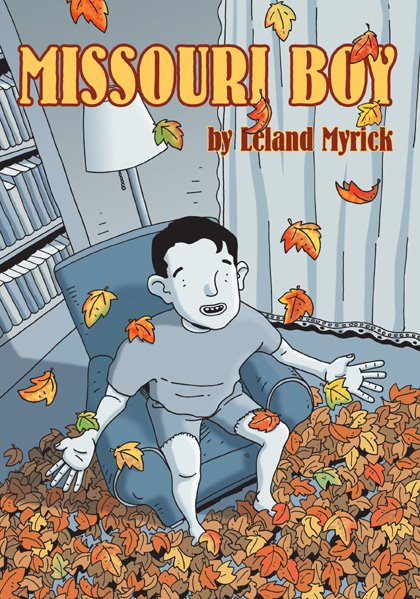 On the newer end, I also read Missouri Boy by Leland Myrick. I was really looking forward to this book in particular, since I was also born and raised in Missouri (though I grew up in St. Louis, not the rural setting that Myrick describes). Unfortunately Missouri Boy was a major disappointment. Perhaps after reading a work as rich and engaging as Alison Bechdel's confessional, Fun Home, which takes you on a much deeper exploration of family bonds, to read something so light just left me wanting. In fact, I read the whole book in fifteen minutes. Myrick introduces several plot points (for example, his brother was jailed for bank robbery), but does little more than indicate they happened. There are no explanations, no details, and really no real reactions by the other characters. The story almost reads like an illustrated outline, rather than a true memoir. I suspect that this was Myrick's intention, but the result is that it almost feels like we’re looking through someone’s photo album, but they're not there to relate the memories or context that each picture triggers. What makes matters worse is that what little text Myrick does add is written in this cold, distant, semi-poetic prose. It feels impersonal. I do like Myrick’s sparsely detailed artwork, which does genuinely conjure a strong sense of the rural Missouri I remember (with details like the fireworks stands, tire swings, etc.) and of course, it’s a First Second book, so the coloring, paper and production values are as high-end as they come. But to be honest, the first chapter alone of Fun Home contained more self reflection and depth of character than Myrick’s entire book.
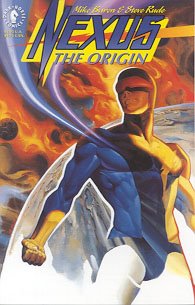 Finally, I read Mike Baron and Steve Rude’s Nexus The Origin. This one-shot came out from Dark Horse way back in 1992, and I’m sure I picked it up during one of my quarter bin binges, but until this week, I’d never read a single story with this particular character. So I figured this would probably be a pretty good place to start, and might even lead me to read more since I know this book has a sort of cult following. But after reading it, what’s clear to me is that the reason people enjoyed Nexus so much was Steve Rude’s art. There’s nothing inherently wrong with Baron’s script, it’s serviceable, and actually far better than your typical Marvel or DC superhero rag, but it still adheres to all the same superhero formulas and really didn’t give me a sense that there is anything particularly unique or interesting about this character. Steve Rude’s artwork, however, is something to savor. Rude really does everything right here, from incredible camera angles, and interesting, creative page layouts, to meticulously detailed panels which add to and, in many cases, enhance the story. In fact, after reading this, I’m tempted to dig out some of my other Steve Rude comics and read them again, particularly the World’s Finest mini-series he did with Dave Gibbons a few years ago.